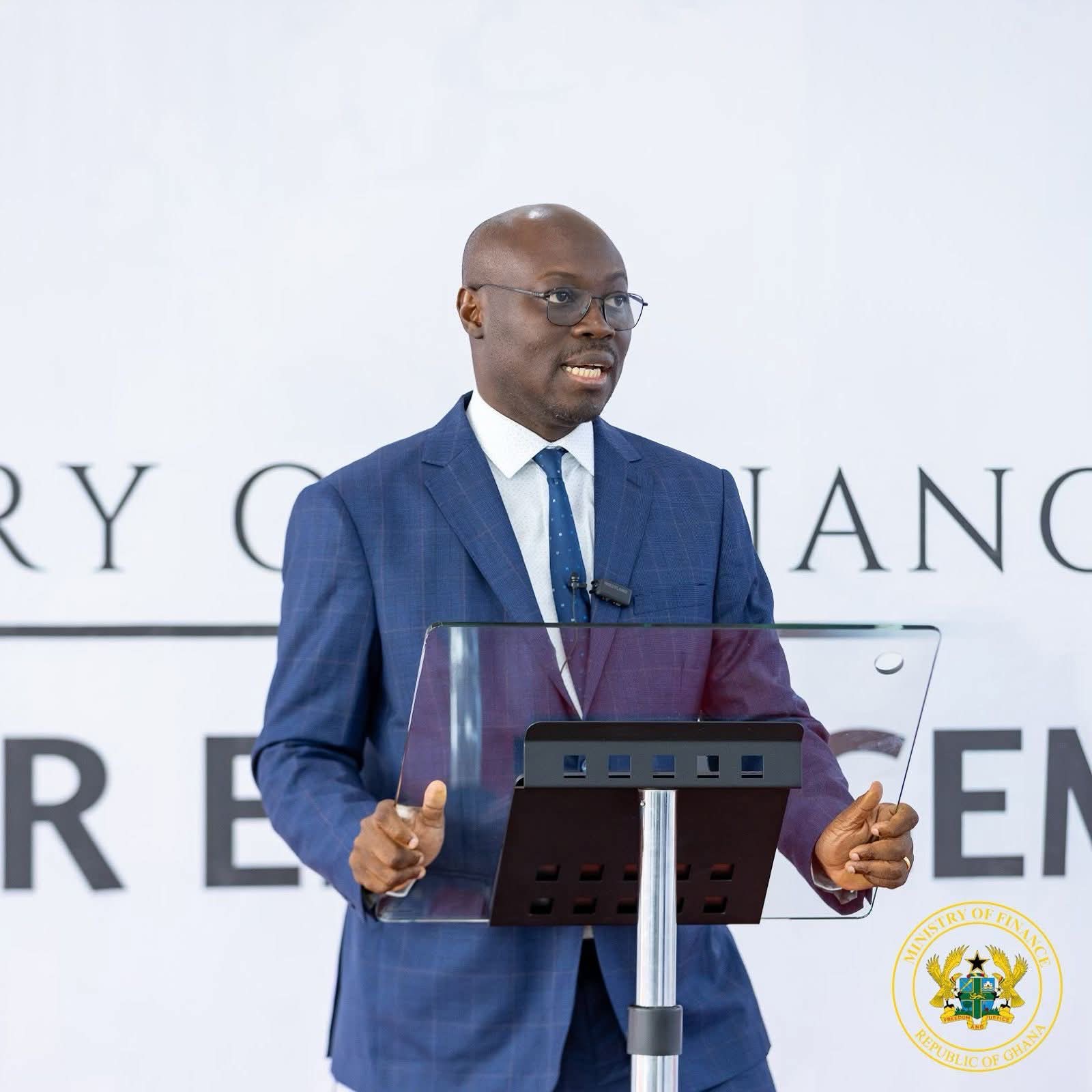
Ghana is set to return to the domestic bond market with a new seven-year issuance today, marking a significant milestone in its post-debt restructuring recovery and a critical test of investor confidence in the country’s economic turnaround.
The bond, which will be marketed from Monday, March 30, 2026, to April 1, with settlement scheduled for April 7, represents the government’s first re-entry into the medium- to long-term domestic debt market since it suspended such issuances in the wake of its unprecedented Domestic Debt Exchange Programme (DDEP).
Announced by the Ministry of Finance, the offer will be open to both resident and non-resident investors, signalling a deliberate attempt by authorities to gauge renewed foreign appetite for Ghanaian debt instruments after a turbulent restructuring period that reshaped the country’s financial landscape.
The seven-year tenor is particularly significant. Since the debt restructuring exercise, the government has relied heavily on short-term Treasury bills and private placements to meet its financing needs.
The reintroduction of a longer-dated instrument suggests growing confidence within the economic management team that macroeconomic stability is returning and that the domestic market is ready to absorb longer-term risk.
According to the Ministry, the bond issuance is designed to achieve multiple strategic objectives, including supporting liquidity management, refinancing maturing obligations, rebuilding Ghana’s sovereign yield curve, and restoring market confidence among both retail and institutional investors.
The minimum bid has been set at GH¢50,000, with the coupon rate to be determined through the book-building process.
By opening the offer to non-resident investors, government is also testing the extent to which international investors are willing to re-engage with Ghana’s domestic debt market following recent reforms and improved macroeconomic indicators.
The issuance comes on the back of renewed engagement with the investment community.
The Ministry of Finance recently hosted its first investor town hall meeting since 2021, bringing together bankers, fund managers, and bond market specialists in a clear signal that government is prioritising transparency and dialogue as part of efforts to rebuild credibility.
At the engagement, Chief Director at the Ministry, Mr. Patrick Nomo, described the moment as a turning point in Ghana’s economic recovery journey.
He expressed optimism that the country would not relapse into debt distress, stressing the Ministry’s commitment to maintaining transparency, strengthening policy credibility, and sustaining open communication with investors.
Finance Minister, Dr Cassiel Ato Forson, reinforced this message, assuring stakeholders that the Ghanaian economy is firmly on a recovery path.
He pointed to a series of positive macroeconomic developments that have emerged since the completion of the DDEP.
Among the key indicators highlighted was the successful completion of successive reviews under Ghana’s programme with the International Monetary Fund, which has resulted in disbursements exceeding US$700 million.
This, he noted, has provided critical external support and helped stabilise the economy.
In addition, Ghana has recorded a sovereign credit rating upgrade to B- with a stable outlook, signalling improving confidence among international rating agencies.
The government has also demonstrated its commitment to honouring its obligations by servicing both domestic and external debts, including more than US$1.4 billion in Eurobond payments in 2025.
Perhaps most striking is the sharp decline in inflation, which the Finance Minister said has fallen to 3.3 percent—its lowest level in several years.
This development, combined with a rebound in economic growth driven by expansion in the real sector, has strengthened the government’s case that macroeconomic fundamentals are improving.
Dr. Forson also highlighted progress on fiscal consolidation, noting that the country has achieved a primary surplus without undermining critical spending on social services and infrastructure.
This balance, he argued, is essential to sustaining long-term growth while restoring fiscal discipline.
Looking ahead, the Minister described the 2026 macroeconomic framework as “credible and achievable,” with a strong emphasis on domestic revenue mobilisation.
He revealed that non-oil tax revenue now accounts for more than 80 percent of total inflows, reflecting efforts to reduce reliance on volatile external sources.
On debt management, government is adopting proactive strategies to address refinancing risks, particularly those associated with large maturities in 2027 and 2028.
These measures include building financial buffers through the Sinking Fund, allocating portions of non-oil revenues to debt servicing, and implementing debt reprofiling strategies aimed at smoothing the maturity profile and lowering borrowing costs.
The re-entry into the domestic bond market is also being supported by institutional reforms.
Government has appointed six financial institutions as bond market specialists to support the programme.
These include Absa Bank Ghana, CalBank PLC, Fincap Securities, GCB Bank PLC, One Africa Securities, and Stanbic Bank Ghana.
These institutions are expected to play a critical role in market-making, price discovery, and ensuring liquidity in the secondary market, all of which are essential for rebuilding a functional and credible domestic bond market.
Authorities have also committed to improving transparency through the regular publication of issuance calendars and enhanced communication with market participants.
These steps are intended to provide predictability and reduce uncertainty, thereby encouraging greater participation from both domestic and foreign investors.
The significance of the seven-year bond extends beyond immediate financing needs.
Analysts view it as a litmus test of Ghana’s broader economic recovery and its ability to restore trust in its debt instruments after the disruptions caused by the restructuring.
A successful issuance could pave the way for a gradual return to longer-tenor borrowing, helping government reduce its reliance on short-term instruments, which often carry higher rollover risks and can expose public finances to volatility.
Conversely, weak demand—particularly from foreign investors—could signal lingering concerns about debt sustainability and macroeconomic stability, potentially complicating the government’s financing strategy in the months ahead.