History often whispers truths long before humanity finds the courage to name them. And then, one day, the whisper becomes a declaration.
The United Nations General Assembly has now formally recognized the Transatlantic Slave Trade as “the gravest crime against humanity.”
For many, this feels long overdue; for others, uncomfortable. For the world, unavoidable.
Proposed by Ghana and supported by an overwhelming majority, the resolution does not only acknowledge history, it reframes it.
It shifts the slave trade from a tragic chapter in textbooks to a moral reckoning that demands response.
Yet let us be clear: this is recognition and not justice. And recognition, while powerful, is only the beginning.
For centuries, the story of the slave trade has been told with softened language; commerce, migration, an unfortunate period of history.
But not until now has the global community, at its highest diplomatic level, declared it for what it truly was: the gravest crime against humanity.
To name something accurately is to strip it of disguise.
And when something is finally seen clearly, it can no longer be comfortably ignored.
This moment matters because it restores moral clarity.
It affirms what generations of descendants, scholars and truth-tellers have always known: that the scale, structure, and intentionality of the transatlantic slave trade were not accidental but engineered, sustained, and justified within systems that benefited many and devastated more.
Yet even in this moment of global agreement, fractures are visible.
While 123 nations voted in favour, key countries opposed or abstained.
Among them, the United Kingdom; a central actor in the history of the slave trade has long maintained that present-day institutions cannot be held responsible for historical wrongs.
But if institutions can inherit wealth, power, and global influence across generations, why can they not also inherit responsibility? The reluctance to engage in reparative justice is not merely about economics. It is about precedent.
It is about the fear that acknowledging responsibility may require not just apology but transformation. And transformation is costly.
Imperialism did not only impoverish the colonized; it distorted the humanity of the colonizer.
It normalized exploitation, institutionalized inequality and redefined power as dominance rather than stewardship.
In doing so, it created a world where injustice could be justified, where systems could be designed to benefit a few at the expense of many and where those systems could persist long after the chains were removed.
This recognition matters not just for Africa or the diaspora but for humanity as a whole.
The resolution calls on nations to consider apologies and contributions to a reparations fund.
Predictably, the conversation has already begun to center on financial compensation. But reparations, if they are to be meaningful, must go beyond money.
They must include truth-telling that is honest and complete, education systems that reflect history without distortion, institutional reforms that address enduring inequalities, cultural restoration that honours identities erased or diminished and psychological healing for generations shaped by inherited trauma.
That Ghana led this resolution is significant not just symbolically, but strategically. It signals a shift.
Africa is not only calling for accountability from the outside world; it is also positioning itself as a moral voice in the global conversation on justice, history, and healing. But with that voice comes responsibility.
For while Africa demands recognition from others, it must also confront its own internal systems: those that continue to reflect the very patterns of exploitation and inequality it seeks to challenge globally.
True leadership requires consistency and true healing requires honesty both outward and inward.
This recognition, though a milestone, is not a destination.
It is a door into uncomfortable conversations, contested responsibilities, and the possibility of a more honest world.
But doors do not change realities, people do, nations do, systems do.
The real question is whether the world is ready to repair the damage.
We cannot build a just future on a selectively remembered past.
Imperialism harms all, so let healing involve all, not as charity, not as goodwill but as a necessary step toward restoring the integrity of our shared humanity. The world has spoken. Now it must act.
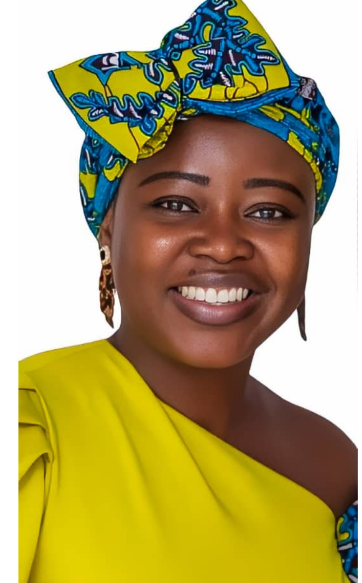
By ALICE FRIMPONG SARKODIE
The writer is Director of Nobel Heights School, Executive Secretary of the Women’s League Platform, and a Youth Leadership Advocate.