President John Dramani Mahama has said a global resolution recognising the transatlantic slave trade as a crime against humanity is vital to prevent historical amnesia.
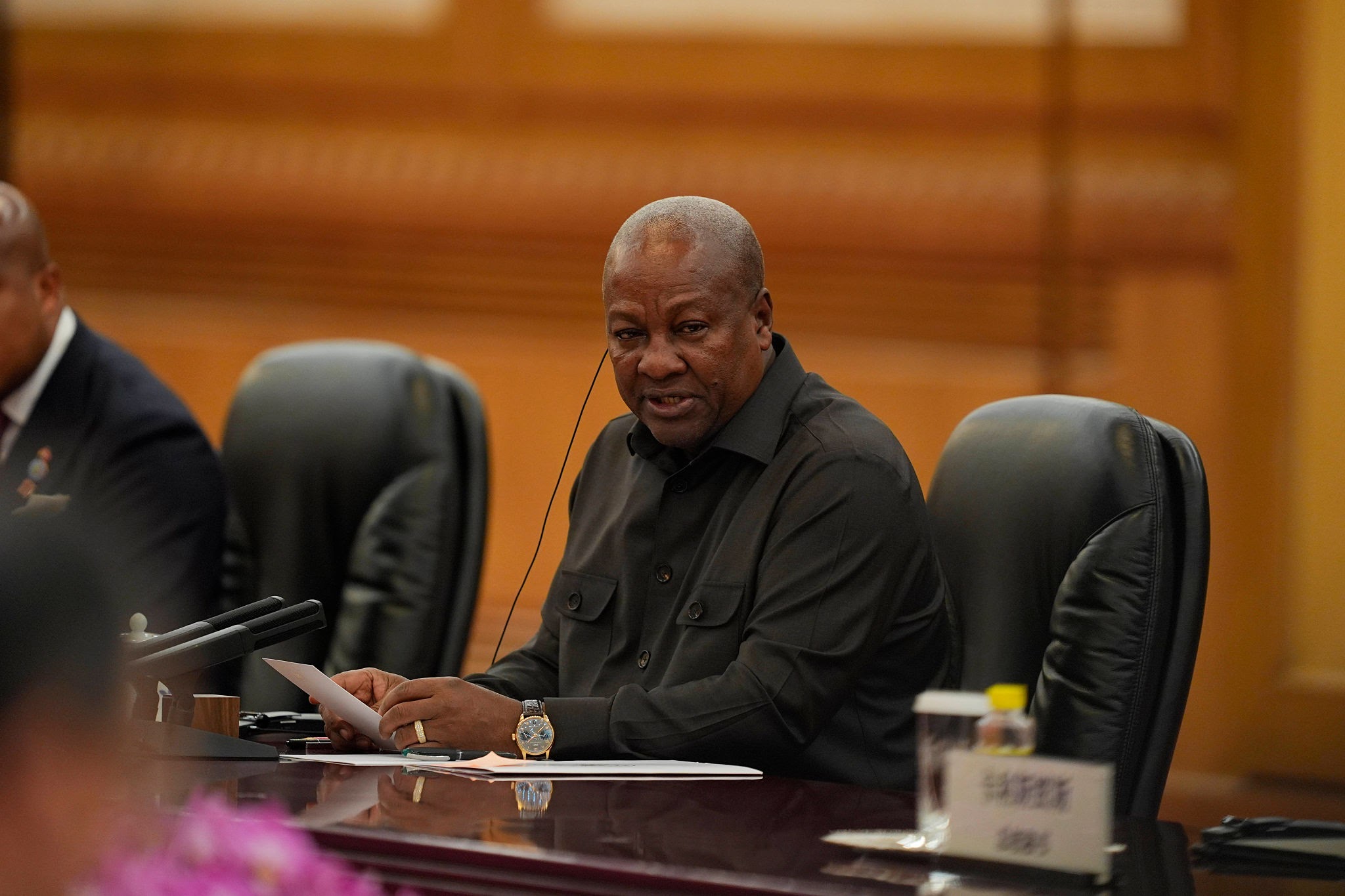
Speaking at a high‑level special event on reparatory justice at the United Nations Headquarters in New York, President Mahama said the proposed resolution offered a collective moral framework for remembrance, healing and accountability.
“This resolution stands as a safeguard against forgetting,” he stated, stressing that the international community must confront the full scale of slavery’s atrocities and reclaim “racial equality, the dignity of Africans, and the humanity of our ancestors who were enslaved.”
The event, convened ahead of deliberations on Ghana’s resolution at the UN, brought together global leaders, diplomats, scholars and advocates to reflect on the enduring legacy of the transatlantic slave trade and pathways towards justice.
President Mahama explained that formally recognising the trafficking and enslavement of Africans as one of the gravest crimes against humanity would enable the world to bear witness to the suffering of an estimated 18 million Africans over four centuries.
He said the resolution represented a concrete step towards healing and reparative justice for Africa, the Caribbean, Latin America and the wider African diaspora.
“I speak these words not only for Ghana but in solidarity with all people of good conscience,” he said.
The President described the transatlantic slave trade as a system in which millions of Africans were violently uprooted, stripped of their identities and subjected to severe brutality.
Captives were confined in coastal dungeons, chained and forced onto ships, where they endured the horrors of the Middle Passage.
Many perished during the journey, with estimates suggesting that between 10 and 15 per cent died en route, while others chose death over enslavement.
Upon arrival in the Americas, enslaved persons were treated as commodities, inspected, auctioned and sold before being forced into labour on plantations and in mines.
President Mahama highlighted the economic underpinnings of slavery, noting that the system thrived on virtually free labour.
“Let’s not mince words. Business was booming because when labour is virtually free, profit margins are huge,” he said.
The President cautioned against sanitising history or focusing solely on abolition narratives, insisting that the brutal realities of slavery must be fully acknowledged.
“We can’t afford to look away; this is precisely the part when we should pay close attention because the devil is in the details,” he said.
Providing historical context, President Mahama cited major destinations of enslaved Africans, including Brazil, Jamaica, the United States and Barbados, and referenced early legal frameworks such as the 1661 Barbados Slave Code and the 1662 doctrine of partus sequitur ventrum in Virginia, which institutionalised racial slavery.
He reiterated that Ghana’s resolution at the UN was not intended to reopen historical divisions but to affirm truth, dignity and justice.
“This is about ensuring that the legacy of slavery is neither forgotten nor diminished,” he said, urging the international community to support the resolution and commit to meaningful action that acknowledges the past while addressing its enduring consequences.
Mr. Samuel Okudzeto Ablakwa, Minister of Foreign Affairs, emphasised the importance of remembrance and collective responsibility.
He noted that forts and castles along Ghana’s coastline, including Elmina and Cape Coast, remained enduring symbols of a system that commodified human beings and reshaped global history.
“Before we speak of justice, policy, or diplomacy, it is fitting that we pause to honour the memory of those men, women and children whose suffering under this system helped shape the modern world while denying them the most basic recognition of their humanity,” he said.
The Minister said the slave trade depopulated and destabilised parts of Africa, and entrenched racial hierarchies whose effects persist in inequality, discrimination and economic disparities.
He drew attention to the gendered dimensions of slavery, noting that African women were subjected to forced labour, sexual violence and reproductive exploitation, leaving deep intergenerational scars.
Mr Ablakwa said Ghana, as the African Union Champion on reparations, remained committed to fostering global dialogue and advancing efforts towards justice and restoration.
He explained that the high‑level event formed part of broader international efforts to confront historical injustices and build consensus on reparatory frameworks.