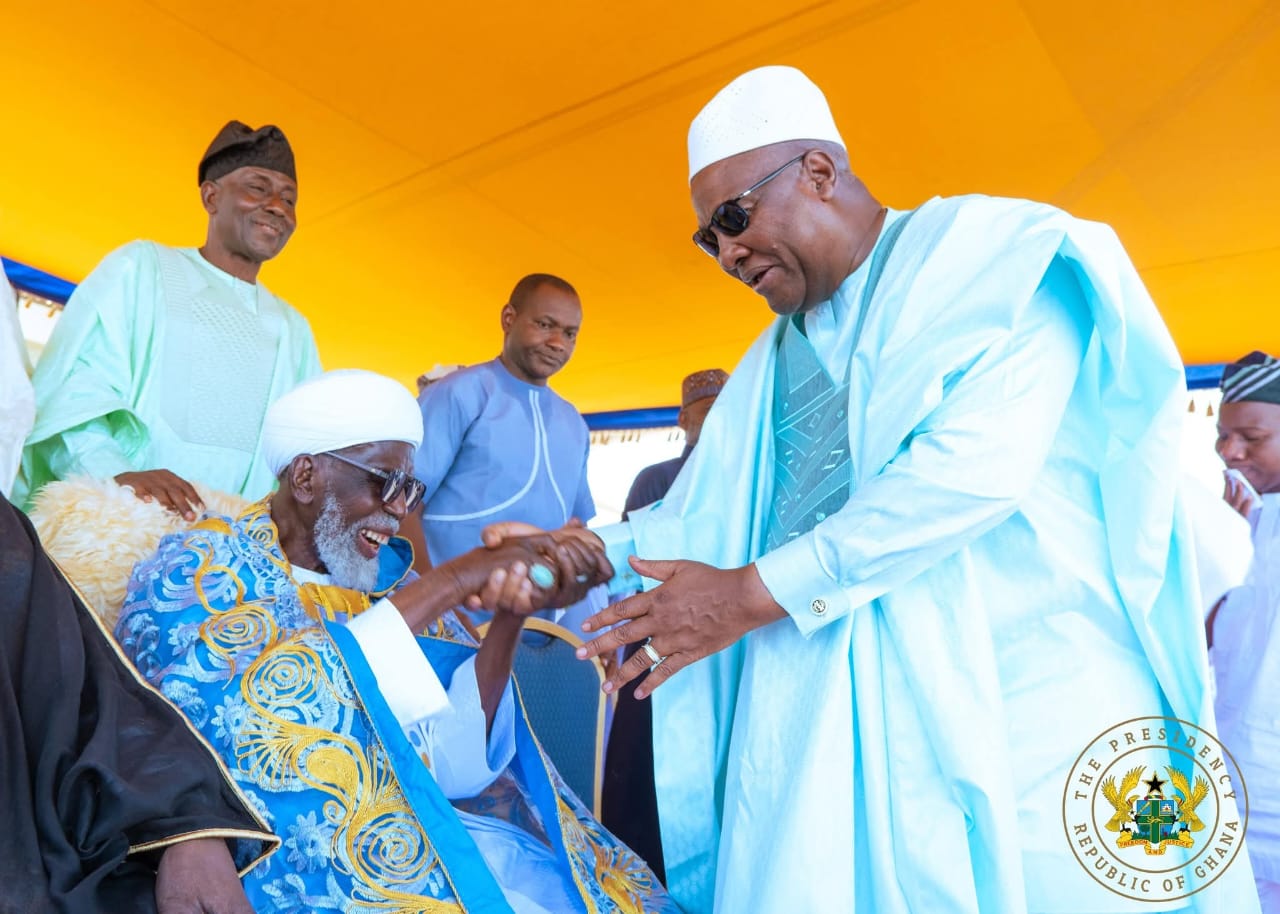
Ghana has reaffirmed its long-standing commitment to global peace and diplomacy, with President John Dramani Mahama calling for an end to conflicts across the world, particularly in the Middle East, and urging collective action through prayer, compassion and dialogue.
Addressing thousands of Muslim worshippers at the national Eid-ul-Fitr prayers held at the Black Star Square in Accra, the President stressed that the country would continue to champion peaceful resolution of disputes and uphold the principles of justice and international law.
The event, held on the theme “Our Earth, Our Future,” marked the end of the holy month of Ramadan and brought together religious leaders, government officials and members of the Muslim community in a show of unity and reflection.
President Mahama used the occasion to draw attention to the devastating human cost of ongoing conflicts, particularly the war in the Middle East, which began on February 28, 2026. He noted that innocent lives continue to be lost, while families and communities are being torn apart by violence.
“We cannot ignore the pain and suffering that is going on in other parts of the world. Innocent lives are being lost, families have been displaced and communities have been shattered,” he said.
He urged Muslims and Ghanaians at large to use the spiritual significance of Eid-ul-Fitr to pray for peace, healing and relief for those affected by conflict.
“Let us pray that Allah will grant comfort to the bereaved families. Let us pray for the healing of those who have been injured and let us pray for relief to those in distress, and wisdom to the leaders of the countries that are fighting to choose dialogue over war,” the President stated.
Emphasising the need for global solidarity, he added, “We must never lose sight of our shared humanity,” calling on world leaders to prioritise peaceful engagement over confrontation.
Ghana’s commitment to peace and diplomacy
President Mahama reiterated that Ghana remains firmly committed to the promotion of peace, justice and respect for international law, noting that the country will continue to lend its voice to international efforts aimed at resolving conflicts through dialogue.
He stressed that the preservation of human life and dignity must remain at the centre of global decision-making, adding that the international community must uphold shared values that promote coexistence and stability.
The President further encouraged citizens to reject division and foster understanding across religious and cultural lines, highlighting Ghana’s reputation for religious tolerance as a national asset that must be preserved.
He also called on Muslims to strengthen bonds of brotherhood and sisterhood by supporting the poor and vulnerable, especially during festive periods.
Religious reflections on environment and responsibility
Delivering remarks on the theme of the event, Sheikh Armeyaw Shuaib, spokesperson of the National Chief Imam, underscored the responsibility of humans as stewards of the earth.
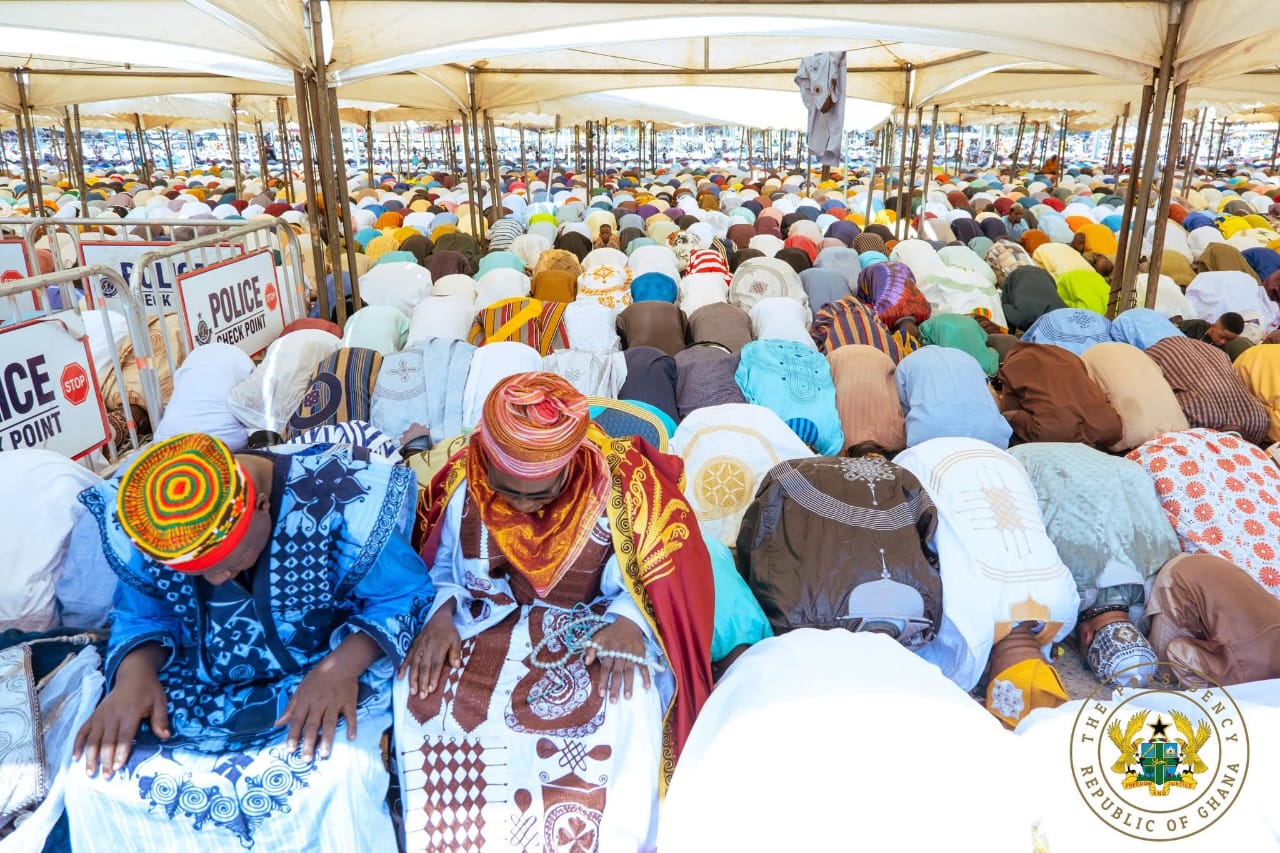
He warned against environmental degradation, citing illegal mining, indiscriminate sand winning and deforestation as practices that contradict Islamic teachings.
“Considering the growing environmental crisis facing our world today, it is imperative that we take collective responsibility to protect our environment. As believers, we must recognise that environmental stewardship is not a mere civic responsibility, but a moral and spiritual obligation rooted in our faith,” he said.
His remarks reinforced the broader theme of sustainability and responsibility, linking environmental protection to moral and religious duty.
Call for unity and national harmony
In a closing prayer, the National Chief Imam, Sheikh Usman Nuhu Sharubutu, commended President Mahama for his engagement with the Muslim community and his efforts to promote inclusiveness.
He urged all Ghanaians, regardless of religious affiliation, to uphold peace and harmony within the country, stressing that unity remains essential to national development.
The event was attended by several dignitaries, including Johnson Asiedu Nketia, National Chairman of the National Democratic Congress, and Tanko Amadu, a Justice of the Supreme Court, as well as leaders from both sides of Parliament.
Eid-ul-Fitr, which marks the end of the 29- or 30-day Ramadan fast, is characterised by prayers, feasting and acts of charity, particularly towards the less privileged.
Beyond the celebrations, this year’s observance carried a deeper message—one of compassion, unity and a renewed global call for peace, with Ghana positioning itself as a voice for dialogue and reconciliation in a world increasingly marked by conflict.
By ELVIS DARKO, Accra